
Petrovietnam and NSRP maintain the energy supply chain amidst Middle East instability


 "Sao chép liên kết


Since the end of February 2026, geopolitical tensions in the Middle East have continuously escalated, causing significant volatility in the global energy market. The risk of disruption in the Strait of Hormuz – a shipping lane carrying approximately 20% of the world's crude oil – has driven up oil prices, leading to increased transportation costs, maritime insurance, and energy imports.
For Vietnam, this poses a significant challenge to the economy , especially in ensuring energy security. In this context, the requirement is not only to ensure sufficient fuel supply but also to maintain the smooth operation of the entire supply chain, from crude oil imports and refining to fuel distribution, without any disruptions.
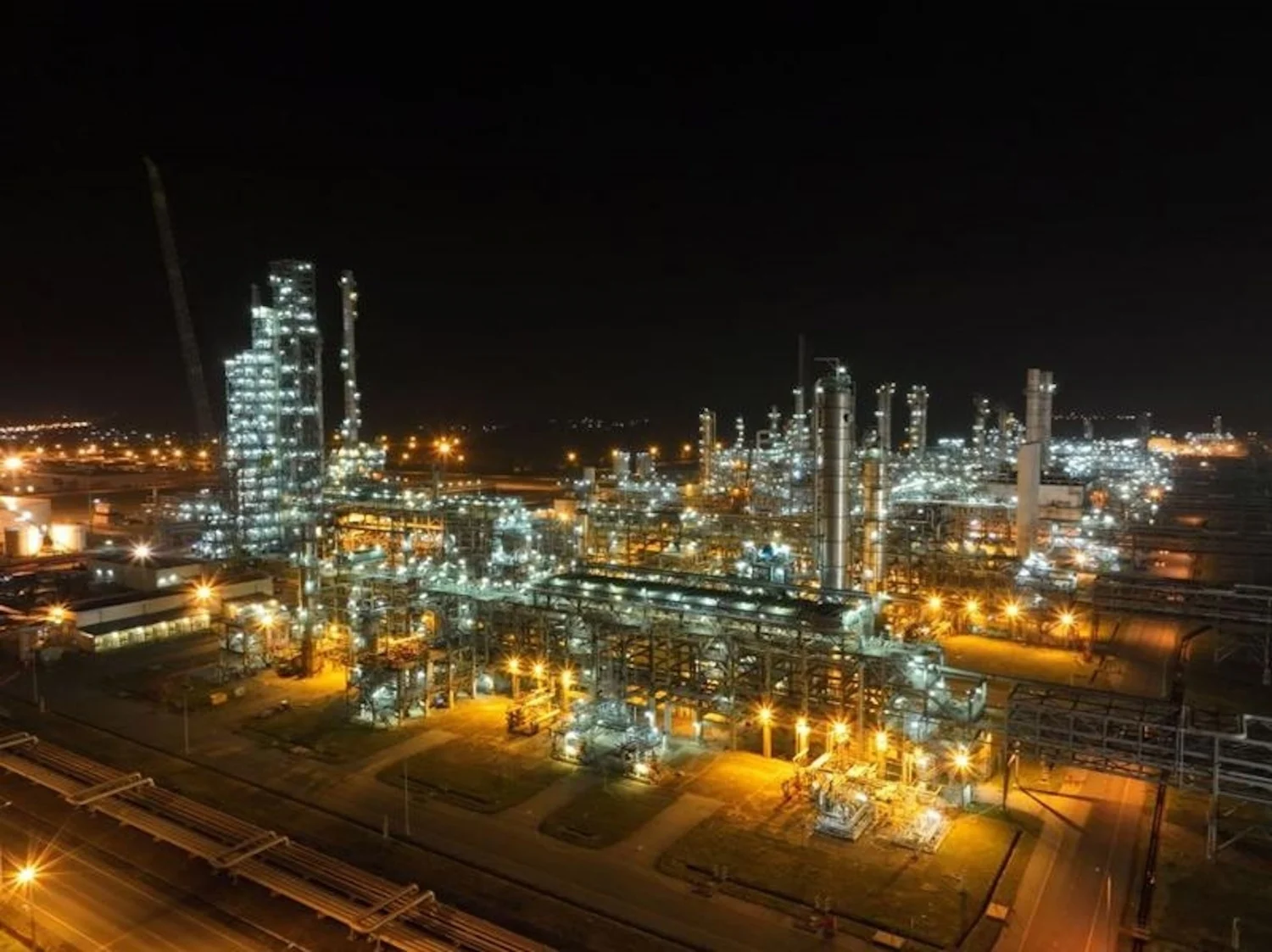 |
| The Nghi Son Refinery and Petrochemical Plant is operating stably, playing a key role as one of the two largest petrochemical refining centers in the country. |
NSRP - A crucial link in the energy supply chain
To respond to fluctuations in the global market, the Government established a Task Force on Energy Security and issued Resolution No. 36/NQ-CP to create a flexible mechanism for the Vietnam National Energy Corporation ( Petrovietnam ) in the buying, selling, and importing of crude oil.
Immediately afterwards, Petrovietnam activated its system-wide emergency response mechanism, requiring its units to closely monitor market developments, develop supply scenarios, and optimize operations across the entire value chain.
In this supply chain, the Nghi Son Refinery and Petrochemical Plant (NSRP), operated by Nghi Son Refinery and Petrochemical Company Limited (NSRP), plays a crucial role as one of the two largest refining and petrochemical centers in the country, supplying approximately 35-40% of domestic fuel demand. Maintaining the stable operation of the Nghi Son Refinery and Petrochemical Plant is therefore of particular importance to the market.
Under the direction of the Ministry of Industry and Trade, Petrovietnam has urgently implemented a comprehensive set of solutions to ensure the supply of raw materials for NSRP. One of the key solutions helping NSRP maintain stable production is diversifying its crude oil sources, instead of relying on traditional sources from the Middle East – a region with significant geopolitical risks. Along with the efforts of the Government and ministries/agencies, Petrovietnam has directed its member units, such as the Vietnam Oil Corporation (PVOIL) and the Nghi Son Refinery Products Distribution Branch (PVNDB), to actively seek new raw material sources in the international market.
Thanks to this, during periods of significant volatility in the global energy market, NSRP has maintained stable production, at times operating at high capacity to optimize output and meet domestic consumption needs. Simultaneously, NSRP has closely coordinated with units within the Petrovietnam ecosystem to ensure an uninterrupted supply of raw materials.
Recently, in mid-May 2026, PVNDB successfully arranged the import of the first batch of Djeno crude oil from the Republic of Congo, totaling over 950,000 barrels, to supply the Nghi Son Refinery.
Subsequently, on May 31, 2026, the ultra-large oil tanker Agios Fanourios I successfully transported nearly 2 million barrels of Basrah Medium crude oil from Iraq to Nghi Son port. This shipment was directly arranged by PVOIL, marking a significant step in expanding the raw material supply network for the Nghi Son Refinery.
The addition of oil sources from Africa and other regions not only helps NSRP maintain continuous production but also enhances the resilience of the supply chain to geopolitical shocks, reducing dependence on a single region or source.
This is also an important step in Petrovietnam's strategy to diversify its raw material sources in order to adapt to the unpredictable fluctuations of the global energy market.
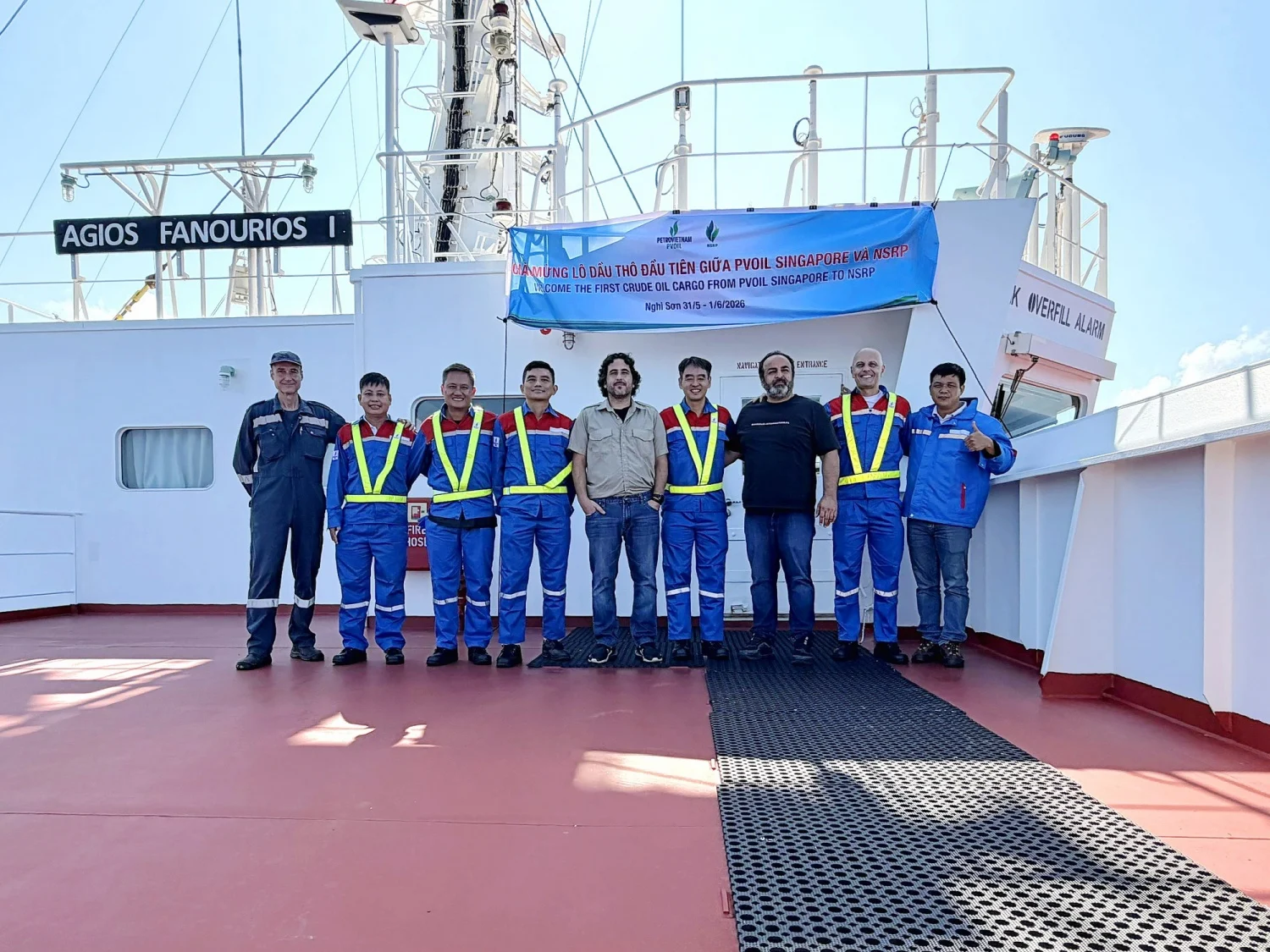 |
| PVOIL welcomes the crew of the Agios Fanourios I. |
Unleashing the power of the Petrovietnam ecosystem.
It can be asserted that Petrovietnam's crisis response capability lies in its closed-loop energy ecosystem, interconnected from upstream to downstream.
While Nghi Son Refinery maintains high operating capacity, Dung Quat Refinery (operated by BSR) has increased its capacity to approximately 120% of its equivalent design capacity to boost production and share the supply pressure with the market.
In the distribution sector, PVOIL, with its network of nearly 1,000 gas stations nationwide, has proactively increased imports, accepting cost pressures amidst rising global oil prices to ensure a continuous supply for the market.
The synchronized coordination among units from oil exploration, transportation, refining, storage to distribution has created a unified supply chain capable of responding flexibly to external fluctuations.
In fact, during periods of significant global market volatility, Petrovietnam's distribution system has maintained a stable supply, preventing shortages or retail disruptions, thus contributing to market stability and consumer confidence.
The transformation from a traditional oil and gas exploration and production business model to a national energy and industrial corporation has become a crucial foundation for Petrovietnam to enhance its supply chain management capabilities, promote the application of science and technology, diversify raw material sources, and optimize the entire energy ecosystem.
By proactively diversifying supply sources, maintaining stable operation of refineries, and leveraging the strengths of the entire ecosystem, Petrovietnam and NSRP have contributed to safeguarding the nation's energy "lifeline" amidst global fluctuations. This is not only a short-term solution but also a crucial foundation for Vietnam to gradually build a self-reliant, flexible, and sustainable energy supply chain in the new development phase.
The results achieved not only reflect Petrovietnam's short-term operational capabilities but also demonstrate its commitment to building a modern, flexible, and resilient energy supply chain that can withstand global shocks.
To enhance this capacity in the long term, Petrovietnam continues to propose that the Government and the National Assembly promptly finalize mechanisms and policies for strategic energy projects; accelerate the construction of national crude oil reserves; and grant the Group greater autonomy in its business operations and crude oil imports.
In the context of a global energy market projected to remain volatile, building a resilient energy supply chain is not only a requirement for the energy sector but also a crucial condition for macroeconomic stability and maintaining the country's growth momentum.
Petrovietnam
![[VIDEO] Việt Nam - Malaysia thúc đẩy hợp tác năng lượng](https://cdn.petrotimes.vn/stores/news_dataimages/2026/102026/16/21/croped/capture20261016212729.png?261016100003)



![[VIDEO] PETROVIETNAM cùng VNABC, CJCC kết nối giá trị lịch sử và văn hóa doanh nghiệp](https://cdn.petrotimes.vn/stores/news_dataimages/2026/102026/15/09/croped/thumbnail/dsc048742026101419012320261015092231.jpg?261015092312)













![[Chùm ảnh] Lễ viếng, truy điệu và an táng hài cốt liệt sĩ tại Công viên Lê Thị Riêng](https://cdn.petrotimes.vn/stores/news_dataimages/2026/102026/14/11/croped/thumbnail/z8372479451243-3849b1ba2020a0d82574aa9a9ff45ec720261014114952.jpg?261015021516)
![[Chùm ảnh] Hoa trắng tiễn đưa 731 liệt sĩ về với đất mẹ](https://cdn.petrotimes.vn/stores/news_dataimages/2026/102026/14/10/croped/thumbnail/img-240620261014102334.jpg?261014111047)

